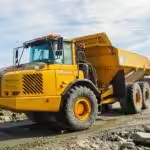

If you’re looking for Forward Tipping Dumper Training, trying to work out which course you need or wondering how to get a dumper ticket, the right route depends mainly on how much genuine operating experience you already have.
A forward tipping dumper is one of the most commonly used pieces of site plant across construction, groundworks and civil engineering, but its simple appearance can be misleading. Safe operation requires an understanding of machine stability, ground conditions, gradients, load security, tipping areas, pedestrian risks and safe travelling procedures.
Vally Plant Training provides NPORS Forward Tipping Dumper Training for complete beginners, experienced operators and previously trained candidates, with courses available at our dedicated training centre in Tewkesbury, Gloucestershire, or on suitable customer sites throughout the UK.
If you’re ready to book rather than research the different routes, view our NPORS Dumper Training Course for current course information, prices and availability.
Forward Tipping Dumper Training at a Glance
What Is a Forward Tipping Dumper?
A forward tipping dumper is a compact site vehicle designed to transport loose materials and discharge them by tipping the skip forwards.
They are commonly used to move materials such as soil, stone, hardcore and construction materials around sites where larger haulage equipment may be unsuitable.
Forward tipping dumpers are frequently used within:
- Groundworks
- Housebuilding
- Civil engineering
- Landscaping
- Utilities
- Highway works
- Drainage
- Construction
- Infrastructure projects
Although they are sometimes simply called dumpers, site dumpers or dumper trucks, a forward tipping dumper is a specific type of machine.
This distinction matters when choosing training and certification. A forward tipping dumper is not automatically the same category as a tracked dumper or rear tipping/articulated dumper.
What Is Forward Tipping Dumper Training?
Forward Tipping Dumper Training teaches candidates how to prepare, operate, travel, load, tip and shut down the machine safely.
The course isn’t simply about learning how to drive forwards and backwards.
Operators need to understand how the machine behaves when loaded, how ground conditions and gradients affect stability, how to approach a tipping area safely and how to avoid putting pedestrians or other site users at risk.
Training combines theoretical knowledge with practical machine operation before the appropriate assessment.
For candidates requiring recognised certification, Vally Plant Training provides NPORS Dumper Training covering the relevant operator training and testing routes.
Do You Need Training to Drive a Forward Tipping Dumper?
Employers have responsibilities to ensure people operating work equipment have received adequate training and are competent for the work they carry out.
That doesn’t mean there is a government-issued document officially called a “dumper driving licence” in the same way as a driving licence for a car.
However, construction sites, employers and contractors commonly require operators to demonstrate appropriate training and competence before they are permitted to operate a dumper.
Recognised operator certification such as an NPORS dumper ticket is widely used as evidence of training and assessment.
If you’re confused about the difference between a licence, ticket, card and training certificate, our Do You Need a Licence to Drive a Dumper? guide explains the subject in more detail.
Which Forward Tipping Dumper Course Do I Need?
There is no benefit in putting an experienced operator through several days of unnecessary beginner training.
Equally, somebody with little or no practical dumper experience should not choose an Experienced Worker Test simply because it is quicker.
The correct route depends on your existing competence.
Novice Forward Tipping Dumper Training
Novice Dumper Training is intended for complete beginners and operators who don’t yet have enough experience to undertake an assessment without training.
Candidates receive structured theory and practical instruction before being assessed.
The training develops skills progressively, allowing candidates to become familiar with the controls, machine characteristics, manoeuvring, travelling, loading and tipping procedures.
If you’re new to operating construction plant, our NPORS Novice Training Guide explains how the novice route works.
Experienced Forward Tipping Dumper Test
Already operate a forward tipping dumper regularly and confidently at work?
You may be suitable for an NPORS Experienced Worker Test (EWT).
An EWT is designed to assess skills and knowledge you already possess. It is not a shortened novice training course.
Candidates should already be able to complete appropriate pre-use checks, manoeuvre safely, travel with and without loads, understand stability, recognise hazards, select suitable tipping areas and operate the machine without instruction.
Before choosing this route, read our NPORS Experienced Worker Test Guide to understand what is expected from an experienced candidate.
Dumper Refresher Training
Previously trained operators may require Dumper Refresher Training where skills need updating or an employer has identified a training need.
Refresher training can also be appropriate after a significant period away from operating or where working practices, equipment or site conditions have changed.
Our NPORS Refresher Training Guide explains when this route may be appropriate.
Never Operated Before?
Choose novice training and learn the machine progressively through structured theory and practical instruction.
Already Experienced?
An Experienced Worker Test may be suitable if you can already operate a forward tipping dumper safely without instruction.
Previously Trained?
Refresher training can update existing knowledge and practical skills where additional training has been identified.
What Does Forward Tipping Dumper Training Cover?
The exact course content depends on the candidate’s experience and training route, but Forward Tipping Dumper Training can cover:
- Operator responsibilities
- Manufacturer’s instructions
- Pre-use inspections
- Controls and safety devices
- Starting and stopping procedures
- Safe manoeuvring
- Travelling loaded and unloaded
- Selecting suitable travel routes
- Ground conditions
- Gradients and crossfalls
- Machine stability
- Loading procedures
- Load security and distribution
- Tipping areas
- Safe discharge of materials
- Edge protection
- Pedestrian and vehicle interaction
- Parking and shutdown
- Defect reporting
Practical training should develop the candidate’s ability to make safe decisions rather than simply operate the controls.
Why Is Dumper Stability So Important?
One of the most important parts of NPORS dumper operator training is understanding stability.
Forward tipping dumpers can work on rough and changing terrain. Their stability can be affected by the load, gradients, turning, travel speed and ground conditions.
Potential factors include:
uneven ground • soft ground • slopes • crossfalls • excessive speed • sharp steering • poorly distributed loads • overloaded skips • unsuitable tipping areas
The machine may behave differently when loaded than when empty.
Operators therefore need to consider the condition and suitability of the intended travel route before moving materials.
A Simple Machine Can Still Overturn
Forward tipping dumpers can appear straightforward to operate, but changing ground conditions, gradients, speed, steering inputs and the position of the load can significantly affect stability. Operators must assess the route and tipping area rather than assuming the machine will remain stable because it has travelled across the area before.
Safe Tipping Areas and Edge Protection
The tipping point is one of the areas where an operator needs to exercise particular care.
A dumper should not simply be reversed or driven towards an excavation, embankment or stockpile edge without considering whether the area is suitable.
Operators need to assess:
- Ground stability
- Edge condition
- Excavations and voids
- Stop blocks or other appropriate controls
- Visibility
- Pedestrians
- Other machinery
- Overhead hazards
- Space required for manoeuvring
- Whether the machine can remain stable while tipping
The weight of the machine and its load can place additional pressure on weak or unsupported ground.
Where site conditions are unsafe, the operator should not continue simply because material needs to be tipped quickly.
Pre-Use Checks Before Operating a Dumper
Operators should carry out appropriate pre-use inspections before putting the machine into service.
Checks should follow the manufacturer’s instructions and workplace procedures and may include:
tyres • wheels • steering • brakes • controls • seat restraint • ROPS • fluids • warning devices • skip and tipping mechanism • hydraulics • general machine condition
Any defects should be reported through the employer’s defect-reporting procedure.
A safety-critical defect may mean the dumper needs to be taken out of service until the problem has been rectified.
Our Plant Defect Reporting Explained guide explains what operators should do when faults are identified during inspections.
What Is an NPORS Dumper Ticket?
An NPORS dumper ticket is a commonly used term for NPORS operator certification covering the relevant dumper category.
The certification route required can depend on the type of work, site and employer.
Candidates should therefore avoid assuming that every dumper card covers every type of dumper.
Forward tipping, tracked and rear tipping dumpers are different machines with different operating characteristics.
Our NPORS Cards Explained guide explains the main NPORS card routes and the difference between trained and competent operator status.
Forward Tipping Dumper vs Tracked Dumper
A forward tipping wheeled dumper and a tracked dumper may perform similar material-moving tasks, but they are not the same type of machine.
Tracked dumpers use crawler tracks rather than wheels and can have significantly different steering, stability and operating characteristics.
Operators moving between the two should not assume experience on one automatically makes them competent on the other.
Vally Plant Training provides separate Tracked Dumper Training for candidates who need training or assessment on tracked machines.
Forward Tipping Dumper vs Rear Tipping Dumper
A rear tipping dumper is also different from the smaller forward tipping machines commonly seen on groundworks and construction sites.
Larger rear tipping dumpers can involve different controls, visibility, articulation, loading arrangements and operating environments.
This is another reason why employers and operators should identify the actual plant category required rather than simply asking for a generic “dumper licence”.
How Much Does Forward Tipping Dumper Training Cost?
The price of Forward Tipping Dumper Training depends primarily on the route required.
Complete beginners need structured training, while experienced operators may only require assessment.
Other factors can include:
- Candidate numbers
- Course duration
- Centre or on-site delivery
- Location
- Previous experience
- Certification requirements
For current centre prices and available routes, view our NPORS Dumper Training Course.
Employers requiring NPORS training at their own workplace can contact Vally Plant Training for a quotation based on candidate numbers, location and training requirements.
Forward Tipping Dumper Training Near Me
Individuals can complete Forward Tipping Dumper Training at our dedicated plant training centre in Tewkesbury, Gloucestershire.
The centre is conveniently located approximately five minutes from Junction 9 of the M5, providing straightforward access from Gloucester, Cheltenham, Worcester, Evesham, Birmingham, Bristol and surrounding areas.
Ashchurch for Tewkesbury railway station is also approximately a five-minute walk from the training centre.
For employers with suitable machinery and facilities, Vally Plant Training also provides on-site dumper training throughout the UK.
On-Site Dumper Training for Businesses
On-site training can be particularly useful where several operators require training or assessment.
Instead of sending employees individually to a training centre, we can deliver suitable Dumper Training at your workplace using your machinery and working environment.
For workplace training, employers will normally need appropriate machinery, operator manuals, a suitable practical area, materials for loading and tipping, relevant documentation and appropriate PPE.
Our On-Site Plant Training Requirements explains what should normally be available before an instructor arrives.
Need Dumper Training for Your Workforce?
Vally Plant Training delivers Forward Tipping Dumper training and testing for businesses throughout the UK. Train multiple operators on your own site where suitable machinery and facilities are available.
NPORS or In-House Dumper Training?
NPORS isn’t necessarily the only certification option available to every employer.
Where recognised NPORS registration isn’t required, in-house Dumper Training may be appropriate for employees operating company equipment within their own workplace.
The employer must determine whether in-house certification is acceptable for its work, clients, sites and insurance arrangements.
An in-house certificate should not be represented as an NPORS Operator Card.
Our In-House Training vs NPORS Accredited Training Guide explains the differences before you choose a certification route.
Can a Red NPORS Dumper Card Be Upgraded to Blue?
Operators following the relevant construction card route may need to progress from a Red Trained Operator Card to a Blue Competent Operator Card.
This normally requires the appropriate occupational NVQ and evidence that the operator is competent while carrying out the job in a real workplace.
Vally Plant Training provides Level 2 Plant Operations NVQ assessment for Forward Tipping Dumper operators who are already experienced and working with the machine.
You can also read our Red to Blue NPORS Card Guide for a fuller explanation of the progression route.
Is Forward Tipping Dumper Training Worth Doing?
For somebody looking to work in groundworks, construction or civil engineering, a forward tipping dumper can be a useful plant category to hold alongside other operator qualifications.
But the value isn’t simply having another card.
A competent operator should understand how to inspect the machine, assess changing site conditions, transport materials safely, protect pedestrians, identify unsafe tipping areas and recognise when the machine should not be used.
Training should therefore be viewed as developing practical workplace competence, with certification providing evidence of the training and assessment completed.
Forward Tipping Dumper Training FAQs
How long is a Forward Tipping Dumper course?
Can a beginner do Forward Tipping Dumper Training?
Can I take a Dumper Test without doing the full course?
Is a Forward Tipping Dumper the same as a Dumper Truck?
Do I need a licence to drive a Forward Tipping Dumper?
How much does Forward Tipping Dumper Training cost?
What does Forward Tipping Dumper Training cover?
Can Forward Tipping Dumper Training be completed on our site?
What PPE do I need for Dumper Training?
Can I upgrade an NPORS Red Dumper Card to a Blue Card?
Where can I do Forward Tipping Dumper Training?
Book Forward Tipping Dumper Training
Ready to complete your Forward Tipping Dumper Training?
View our NPORS Dumper Training Course for current prices, Novice Training, Experienced Worker Tests and Refresher Training.
Vally Plant Training provides centre-based NPORS training for individuals in Tewkesbury, Gloucestershire, as well as on-site Dumper Training for businesses throughout the UK.
Call 01684 297167 or email info@vallyplanttraining.co.uk.
Book Your Forward Tipping Dumper Course
Novice, refresher and experienced operator routes available at our Tewkesbury training centre, with on-site Dumper Training available for businesses throughout the UK.
info@vallyplanttraining.co.uk
Related Posts